
How E-HUB Energy Storage Systems Work Together
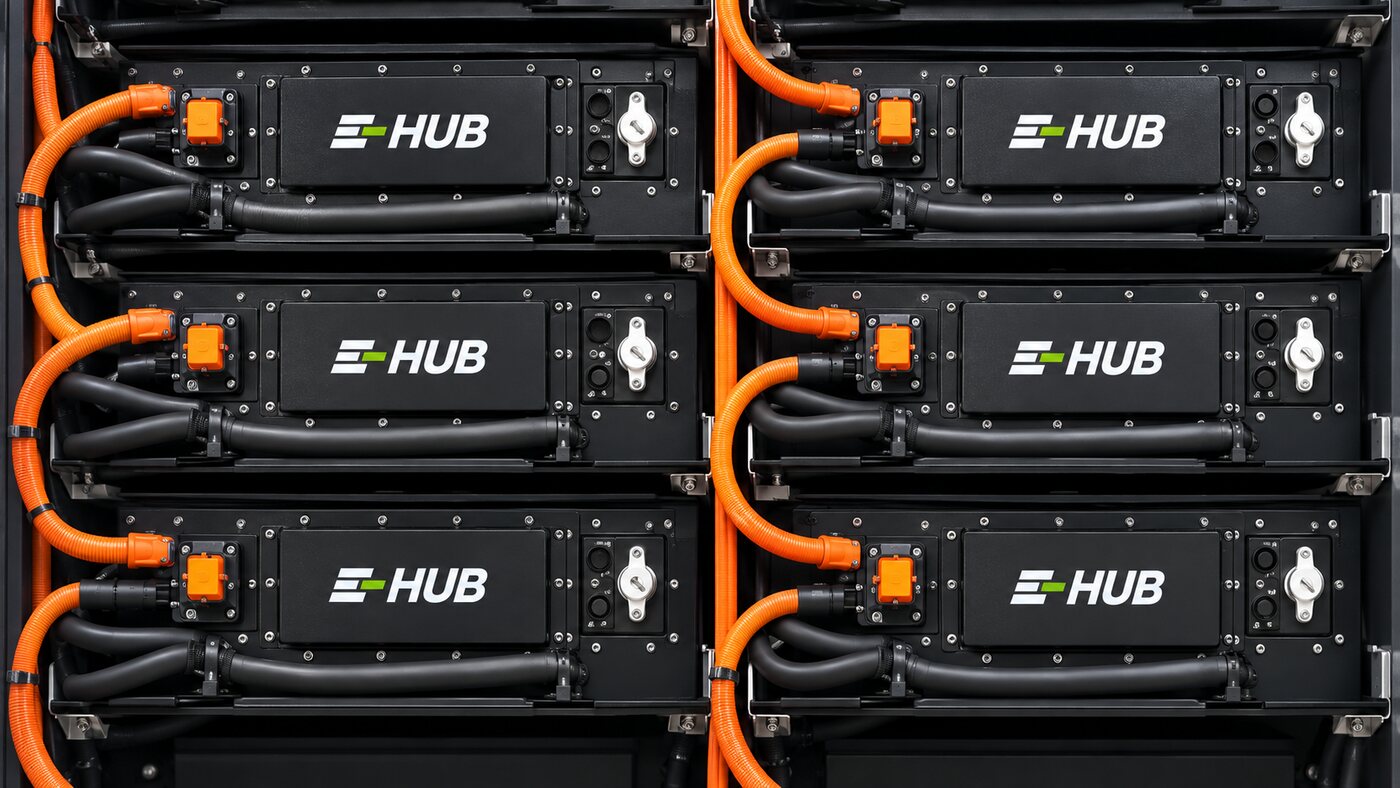
All-in-One Architecture from Battery to Control
An energy storage system responds to the facility’s needs through the cooperation of batteries, power electronics, and control systems. The amount of power it can deliver at any given moment depends on factors such as state of charge, temperature, and equipment or grid-connection constraints. In our all-in-one solution, we integrate these elements into a single, cohesive system.
CTP Battery Packs and BMS Oversight
Lithium iron phosphate (LFP) cells are integrated directly into battery packs using cell-to-pack (CTP) technology, eliminating the traditional intermediate module level. Packs are connected into battery clusters. The Battery Management System (BMS) monitors voltages, currents, and temperatures, and estimates the state of charge (SOC).
Based on these data and configured limits, the BMS oversees battery charging and discharging conditions. It is also responsible for cell balancing and alarm management. When protective thresholds are reached, the system can derate operation or disconnect the battery.
From Strategy to Power Flow
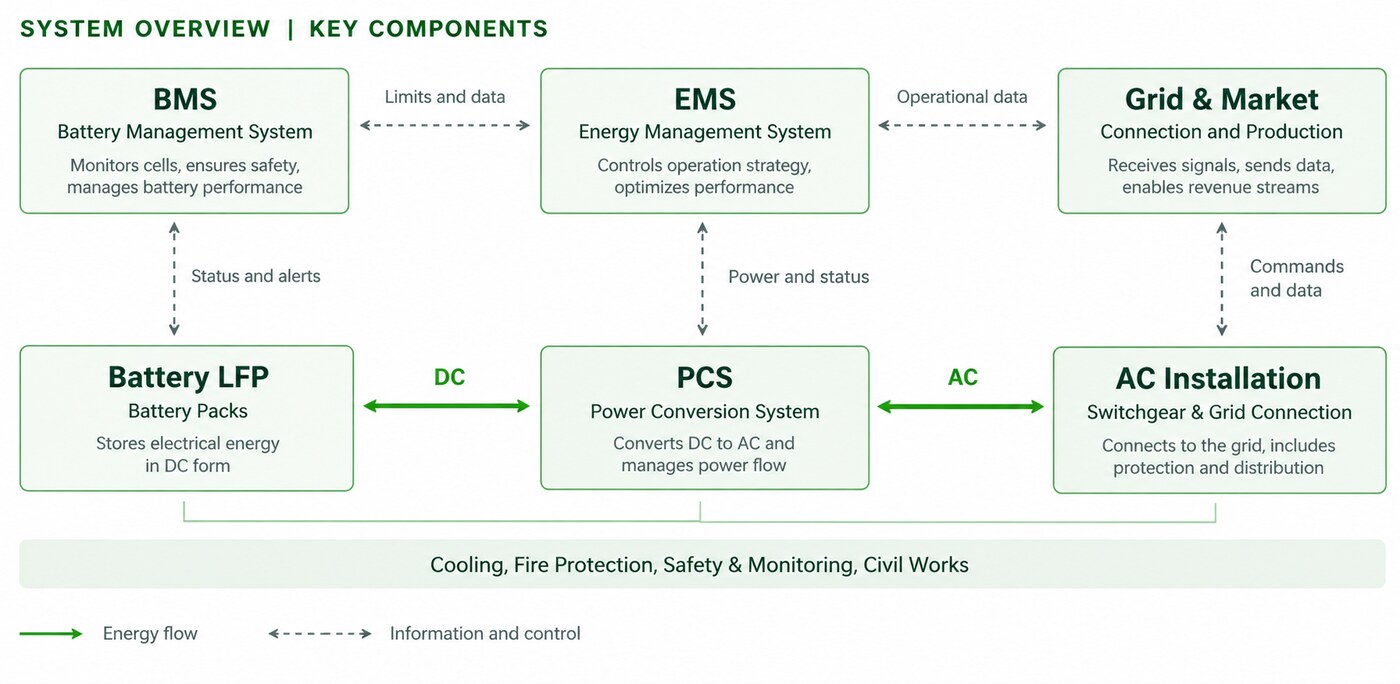
In an all-in-one system, electrical connections and communications form a unified architecture. Battery and facility data are sent to the control system, and commands are executed within safe operating limits.
EMS Manages Energy
The Energy Management System (EMS) combines battery and facility data with the selected operating strategy. Based on this, it calculates schedules and charging/discharging commands. It can support increasing RES self-consumption, peak shaving, or other project-specific functions.
Commands must account for current system limits. If the battery is near its lower SOC limit, a previous discharge plan is adjusted. Cooperation between the EMS and battery oversight translates the strategy into actionable operation.
PCS Executes Commands
The bidirectional Power Conversion System (PCS) handles energy exchange. During charging, it converts AC power to DC. During discharging, the conversion direction reverses, delivering power to the facility or grid.
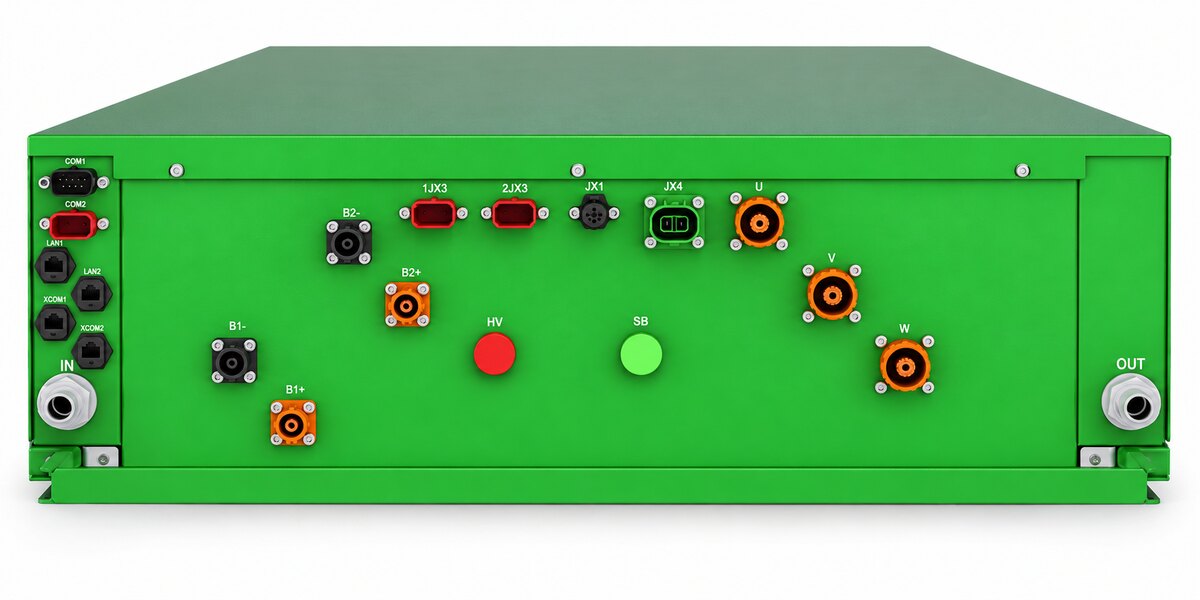
Integrated System in Practice
Cooling and protection systems operate in parallel with the power path. Their status impacts the conditions under which the storage system can execute scheduled tasks.
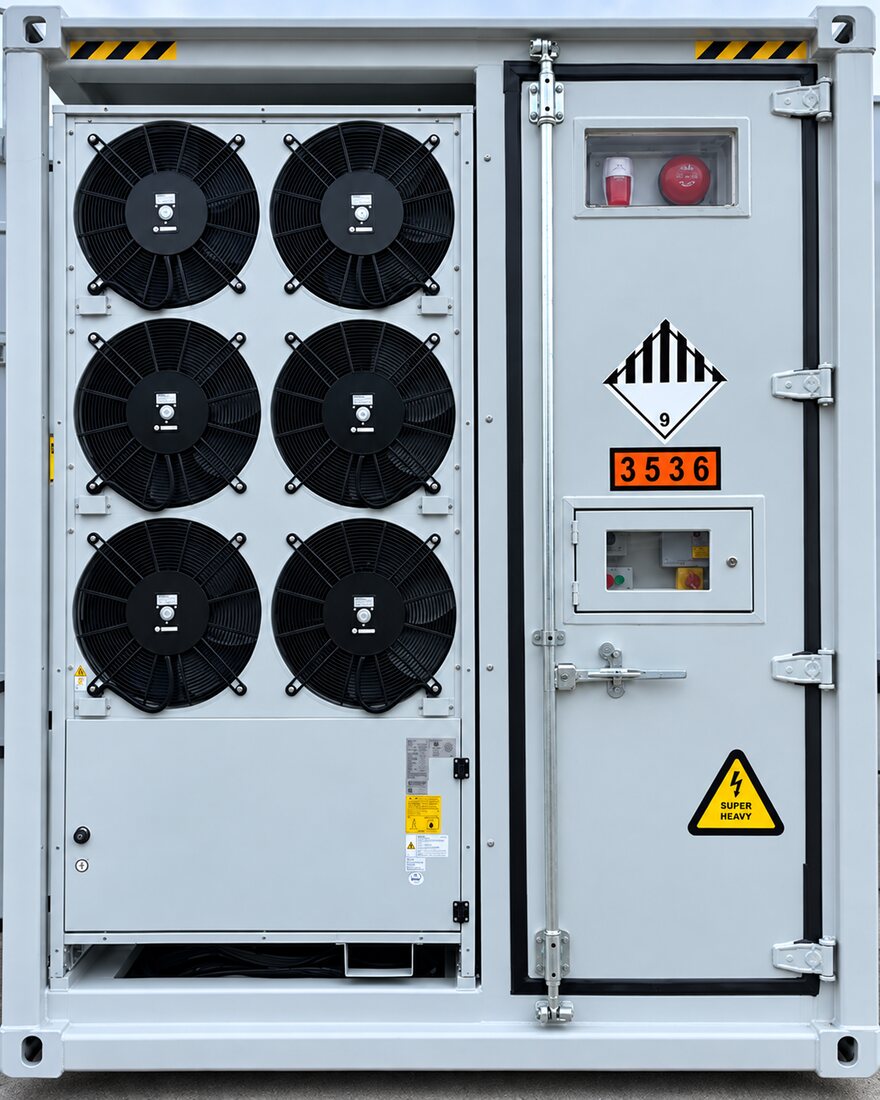
Temperature Control
The liquid cooling loop dissipates heat via pack cooling plates. It maintains optimal thermal conditions and minimizes temperature differences between cells. Cooling also covers power electronics.
Temperature directly affects available power and equipment lifespan. Measurements and cooling responses are thus integral to continuous storage monitoring.
System Protection
Electrical protection, hazard detection, and fire suppression complement BMS monitoring. System responses to anomalies depend on event type and protective logic.
Storage Co-located with Solar PV
In a facility with on-site PV, surplus generation can be directed to storage. EMS commands charging, PCS executes power flow, and BMS monitors battery parameters. When facility demand spikes, the system draws on stored energy to reduce grid consumption.
Actual operation is governed by the chosen strategy, available energy, power limits, and grid-connection conditions. During commissioning, we verify metering, communication, command response, and alarms. Functional testing validates multi-system interaction.
Selecting the right storage system begins with understanding its operating profile.
Planning a BESS for your facility or RES plant? Let’s discuss your consumption profile, required power, and control strategy.