1. Battery Platform
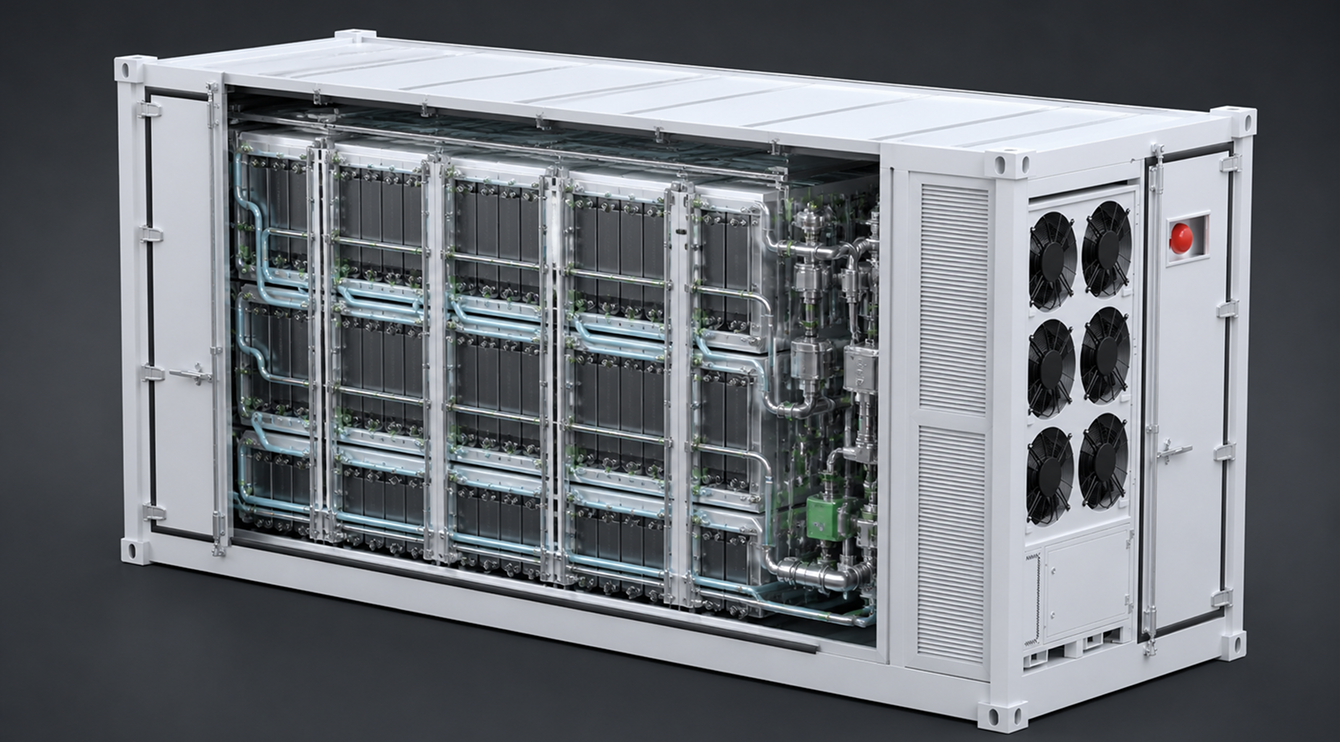
E-Hub systems use lithium iron phosphate (LFP) cells — the safest and most durable chemistry for stationary energy storage. Every cell is Grade A rated at 314 Ah, sourced from Tier 1 manufacturers, and individually tested before assembly.
LFP provides inherent thermal stability and does not experience thermal runaway under the same conditions as NMC or NCA chemistries. Combined with our modular architecture (cells → modules → packs → racks), this creates a battery system delivering consistent performance over 8,000 charge/discharge cycles at 70% State of Health. Cell balancing uses an active DC-DC conversion scheme that continuously redistributes energy between cells — during charging, discharging, and standby — reducing losses, improving efficiency, and extending pack life.
2. Liquid Cooling System
Temperature is the single most important factor affecting battery life. E-Hub uses a liquid cooling architecture covering both battery packs and PCS. The coolant circulates through a distributed channel network, maintaining a temperature delta of less than 5°C across the entire system — ensuring optimal operation from -25°C to +55°C.
3. Siemens Energy Management System
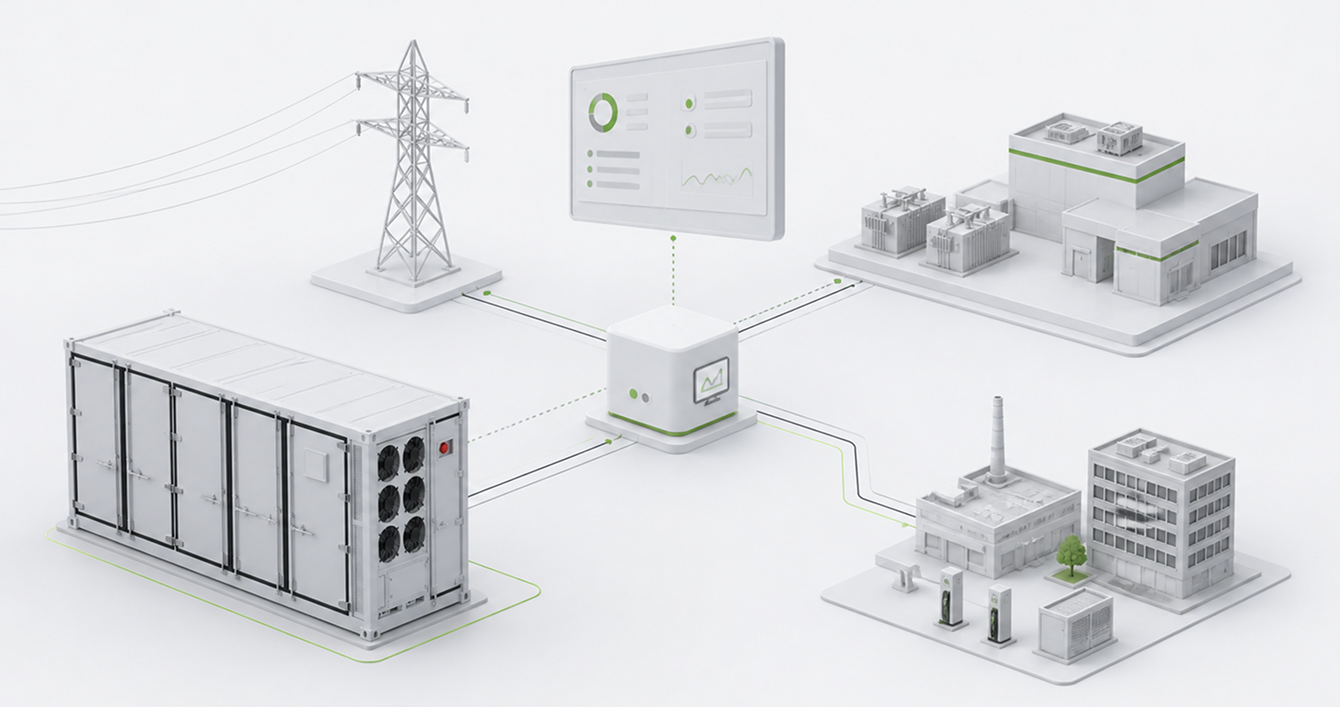
Every E-Hub system runs on a unified Siemens control stack: PLC, SCADA, and EMS on a single platform. This provides real-time monitoring from cell level to grid connection, automatic synchronization with European MV networks (10–30 kV), and support for automated dispatch — including FCR, aFRR, peak shaving, and energy arbitrage. Communication protocols: RS-485, Ethernet, CAN, PROFINET.
4. Three-Level Fire Suppression
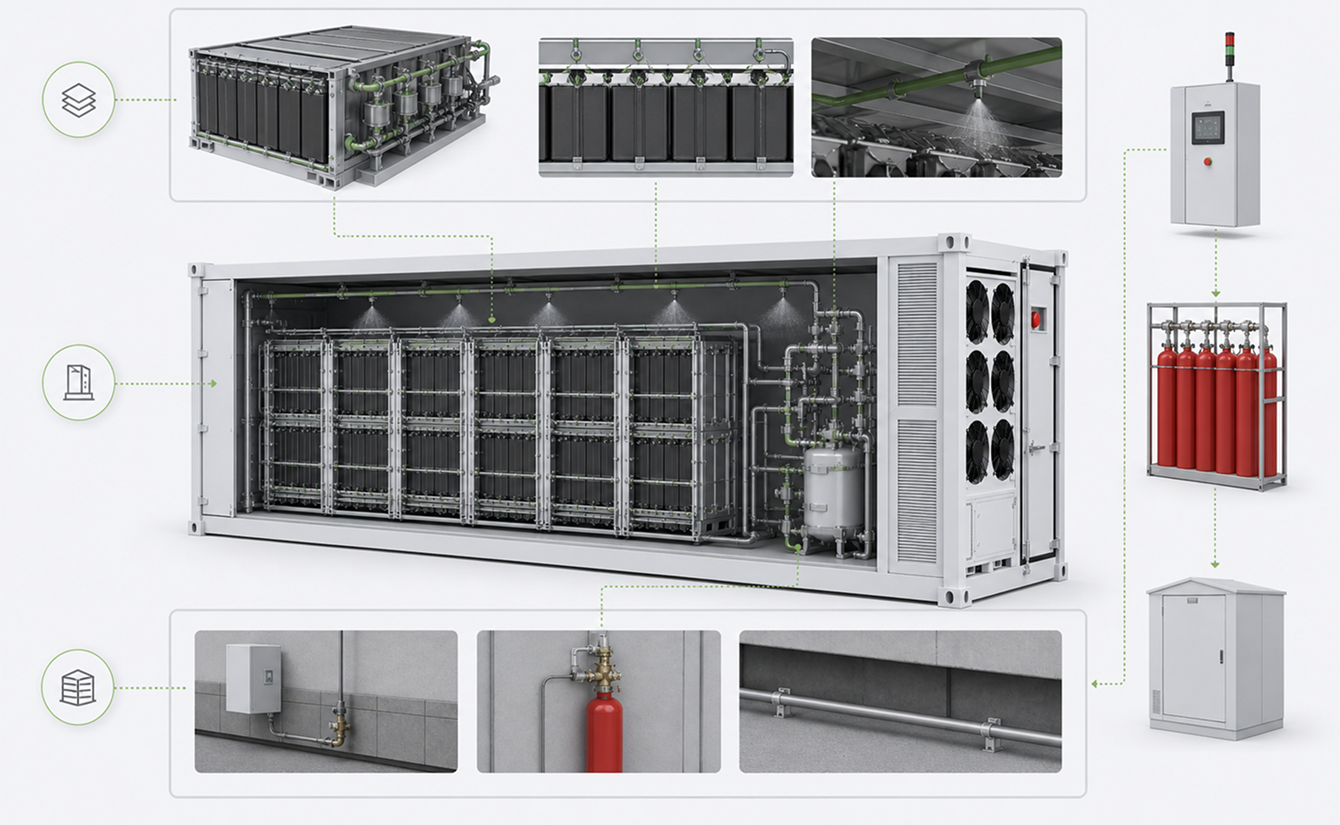
E-Hub uses a three-level fire suppression architecture:
Level 1 — Pack level. Aerosol is deployed inside the affected pack, displacing oxygen and suppressing the thermal event at its source.
Level 2 — Container level. A second aerosol system activates at the container level, displacing air from the entire enclosure.
Level 3 — External containment. An external sprinkler water system floods the container as a final containment measure.
Detection is handled by temperature sensors, smoke detectors, and gas sensors integrated with BMS. Response time: seconds. Each module is sealed to IP67. Full system: IP54. PCS: IP66.